
 JOIN
JOINThe Code of Practice for General-Purpose AI models adopted this summer includes Measure 1.3 “Identify and comply with rights reservations when crawling the World Wide Web”. The EU Commission has now started a consultation (deadline 9 January 2026) on protocols that exist for expressing right reservations, which STM will respond to. The questionnaire includes several questions on the TDMRep protocol, so this is an excellent opportunity for further visibility and legitimisation at EU level of the protocol.
Author: Felicia Bowling
Survey on Secondary Publication Right and research exception
As previously reported, the EU Commission is seeking the stakeholders’ views on potential changes at EU level on Secondary Publication Right and research exception from copyright. Because of the disappointing survey design, STM is drafting a critique letter, co-signed by other publishing organisations in Europe and globally, in addition to its survey responses. Thank you to all members that contributed to STM’s approach. We will keep you informed on next steps.
NIH posts comments on APC caps
NIH has released nearly 1,400 pages of comments received from more than 900 commenters on the policy proposal on “Maximizing Research Funds by Limiting Allowable Publishing Costs.” STM’s was among the approximately 10% of submissions that were very extensive, along with several other publishers/publishing organisations and some large institutions and funders. Other than Gates, many of the longest responses raised significant concerns. STM is on the lookout for further policy announcements, potentially coming early next year, while continuing to engage in advocacy.
DOE asks for input on AI model development
Although not explicitly connected to the Genesis Mission, the Department of Energy has issued a request for information (RFI) on Partnerships for Transformational Artificial Intelligence Models. DOE plans (again, separate from the Genesis Mission) “to establish a public-private consortium to curate DOE scientific data across the National Laboratory complex for use in artificial intelligence (AI) models and to develop self-improving AI models for science and engineering using this data.” DOE asks about using DOE data “potentially in combination with data from other partners” and “what intellectual property rights, e.g., invention and data, for the Government, National Laboratories, and partners and developers would best promote AI dominance and enable, not hinder, innovation.” STM is still reviewing a potential response. Comments are due by January 14.
STM joins AAP in support of international research collaboration
As noted in last month’s newsletter, STM sought to raise concerns about the SAFE Research Act (Securing American Funding and Expertise from Adversarial Research Exploitation Act of 2025) with Congress and its potential impact on international research collaboration and communication. In a letter to the House Armed Services Committee, STM and AAP noted that the bill “would inadvertently undermine our nation’s security and prosperity by restricting international research collaboration and damaging the transparent exchange of knowledge upon which scientific and economic progress depends.” STM also offered to work with the House Select Committee on Competition with China to craft a better approach to safeguard “the security and integrity of the U.S. research enterprise” while preserving “with the fundamental principles of open scientific inquiry.” Read the letter here.
US Genesis Mission envisioned to spur science with AI
Just before Thanksgiving, the White House issued an executive order (EO) announcing a new project to advance scientific discovery and technological innovation using artificial intelligence. The “Genesis Mission”, to be housed at the Department of Energy, seeks to “double the productivity and impact of American science and engineering within a decade.”
The centerpiece of the Genesis Mission will be the creation of “an integrated AI platform to harness federal scientific datasets” that will be used to “train scientific foundation models and create AI agents to test new hypotheses, automate research workflows, and accelerate scientific breakthroughs.” The “American Science and Security Platform” is described as containing “datasets from federally funded research, other agencies, academic institutions, and approved private-sector partners, as appropriate” and including “proprietary, federally curated, and open scientific datasets, in addition to synthetic data generated through DOE computing resources.” There is no definition provided for “data,” which is a concern, although the EO does say the platform’s operation must be consistent with “intellectual property protections.”
STM is seeking additional information from OSTP and DOE and will share as details become available.
White House asks for input on accelerating American Science
Through December 26, the White House Office of Science and Technology Policy (OSTP) will be taking “input from all interested parties on Federal policy updates that aim to accelerate the American scientific enterprise, enable groundbreaking discoveries, and ensure that scientific progress and technological innovation benefit all Americans.” The Request for Information (RFI) indicates that this is part of “a comprehensive assessment of how the Federal government prioritizes and structures scientific research.” STM and its members have a lot to contribute to that discussion, and we encourage submissions.
While much of the RFI is focused on accelerating the pipeline from research discovery to application, many of the specific questions focus on how policy (including copyright and IP) helps or hinders the advancement of science. Those questions provide an opportunity for publishers to emphasize our role in the research ecosystem and the need for policies that support publishing, research integrity, metadata, and linking (amongst other topics). See the details of the RFI here.
Shutdown repercussions continue for US research
The impact of the federal shutdown on the US research enterprise was significant, particularly coming on the back of a year of turbulence (grant cancellations, indirect cost cuts, etc.). As noted by a researcher in AIP’s FYI report, ‘It’s not like we’re done and back to normal, because grant reviews have not happened, new batches of funding have not been sent.”
STM continues to work to assess the prospects for restoring funding, particularly with the appropriations for the current year still uncertain. STM is also continuing advocacy for robust grant funding, support for indirect cost recovery and the FAIR model (forwarded by US universities and opposition to NIH’s proposal to limit publication expenses.
Inside STM’s November visit to Japan: key themes, takeaways & what’s next
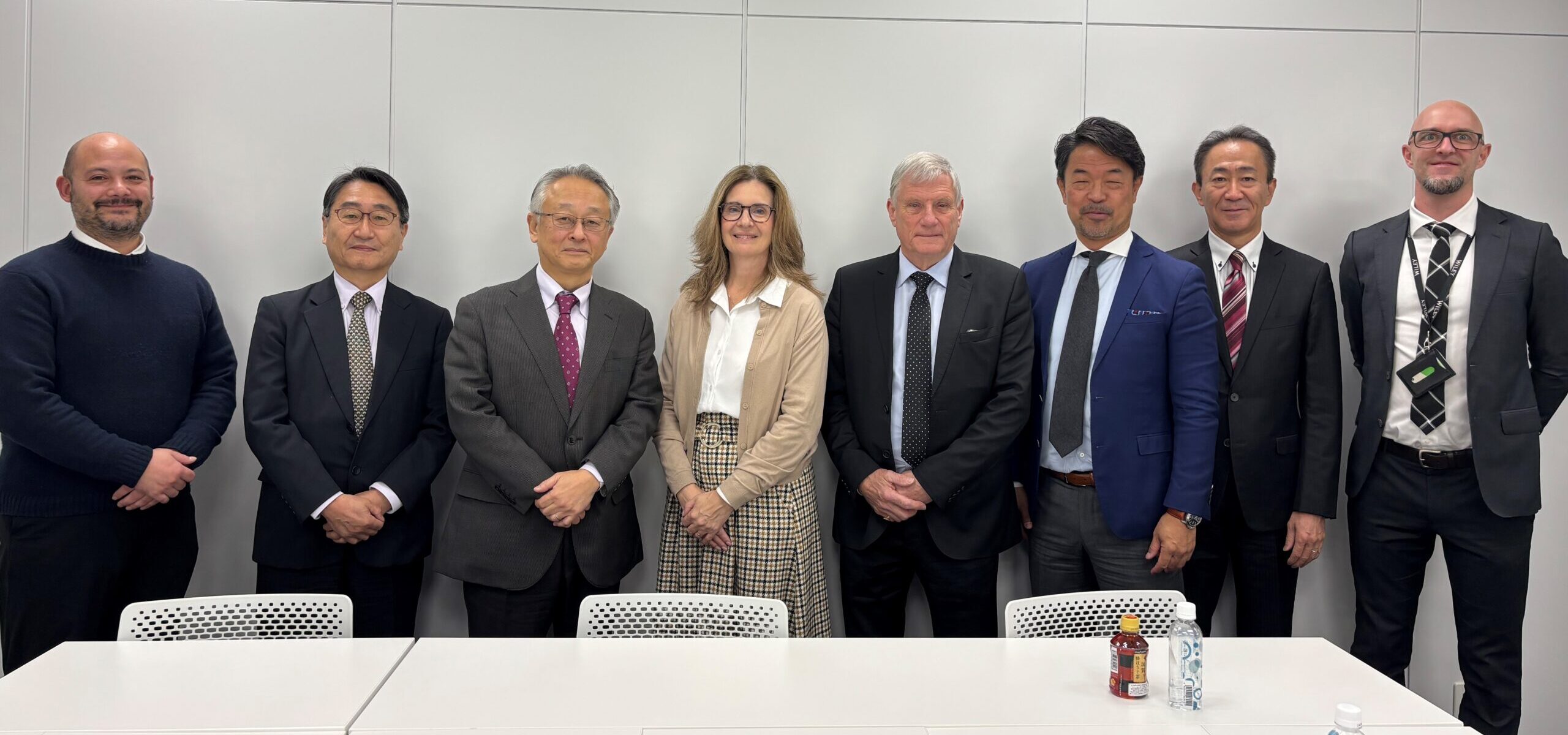
In early November, STM CEO Caroline Sutton spent several days in Tokyo meeting with funders, government leaders, research agencies, and publishing groups — alongside delegates from STM’s Japan Chapter. As in last year’s visit, the conversations were productive, wide-ranging, and grounded in strong local partnerships. And while open science dominated the agenda in 2024, this year the spotlight had clearly shifted to AI, research integrity, and the evolving policy landscape in Japan.
Government: A New Five-Year Plan and a Changing Landscape
One of the most important conversations took place with Professor Kohei Miyazono, the new Chief Executive Member of Japan’s Council for Science, Technology and Innovation. With his background as a journal editor and society president, he brings a nuanced understanding of scholarly publishing to the table.
Japan’s next Five-Year Plan is expected in early 2026 and may include efforts to reverse the country’s relative decline in research output — potentially with an increase in national research investment.
Discussions also touched on rising political tensions with China, including a growing concern: inter-governmental research co-funded by China may require that 50% of resulting publications appear in Chinese domestic journals.
Open science, which dominated last year’s visit, received only brief attention — a sign that, with the national policy now launched, ministries have turned their focus to newer priorities.
Funders: Open Access Progress & AI Guidance
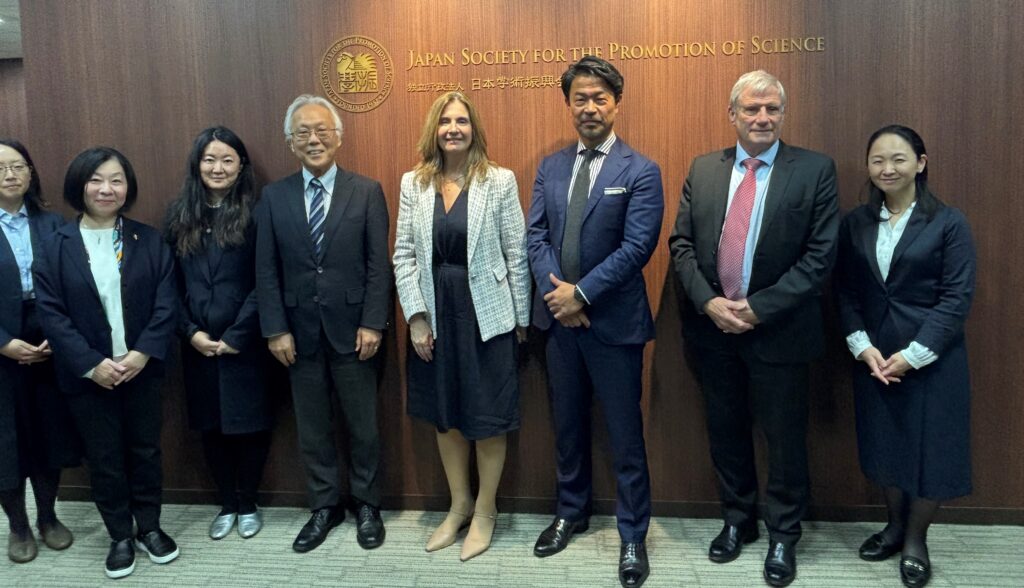
Meetings with AMED, JSPS, and JST remained warm and constructive.
- AMED sees open access expanding gradually under the national policy and is now considering how to guide researchers on use of AI — both in research practice and in grant evaluations.
- JSPS anticipates possible increases to Kakenhi grant funding and has recently issued guidance on AI use.
- JST is introducing GrantsData, a new dataset repository that joins a growing ecosystem: J-STAGE, Jxiv, ResearchMap, and JBM. JST also reported increasing requests from LLM developers seeking access to J-STAGE content for training.
The annual JST/STM Seminar drew its largest audience yet (217 attendees), with a strong slate of talks focused on AI’s impact on publishing, research workflows, and data integrity.
Copyright & Rights Management: New Conversations and a Broader Table
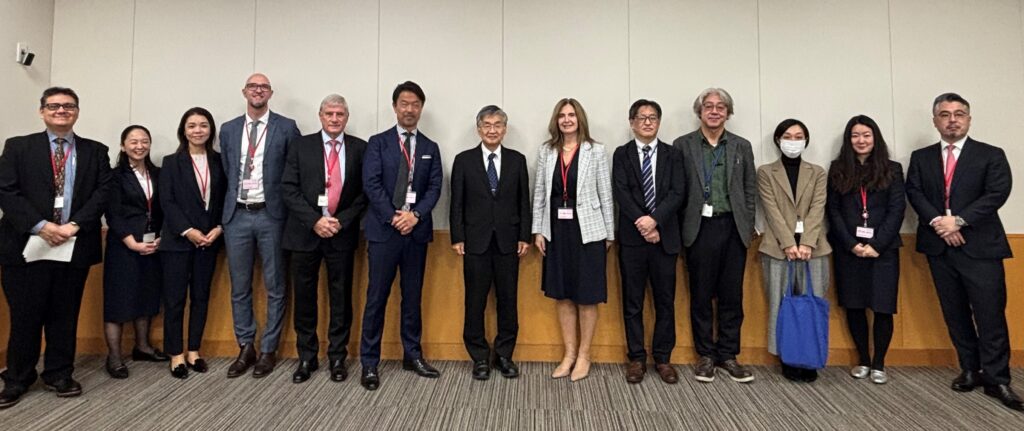
This year’s agenda expanded to include both the Agency for Cultural Affairs (ACA) and the Japan Book Publishers Association (JBPA).
ACA reaffirmed that any AI use of copyrighted works that risks harming commercial rights requires licensing under Japanese law. They are now convening creative industries and rights-holder groups across three working groups to develop a Code of Conduct for AI and copyright — an area where STM has offered continued support.
Discussions also included updates on:
- SATRAS, which collects and distributes compensation for educational copying (roughly ¥4.8 billion annually), and
- SARLIB, the new system overseeing library transmissions under Article 31 of the Copyright Act, where publishers may opt their titles out of transmission.
Open Access & National Policy Momentum
With the April 2025 launch of Japan’s national open science policy, agencies signaled they are now turning attention to other pressing issues such as AI governance and research integrity.
At the same time, STM data presented during the visit showed an interesting trend: the share of subscription articles is increasing while open access output is tapering, despite a growing number of read-and-publish agreements.
Factors contributing to this include:
- Institutions asking researchers to pay additional fees even under existing agreements
- Restrictions at some universities on publishing in non-Q1/Q2 journals
- Policy flexibility allowing non-immediate OA when a reason is provided
As a result, many articles may continue to appear in subscription journals for the foreseeable future.
Meanwhile, NII continues its work on metadata integration and infrastructure development through CiNII Research, connecting institutional repositories across Japan.
Local Publishing Community & Outreach
Caroline and the STM delegation also met with JBPA leadership for the first time in over a decade — a meaningful step toward deeper collaboration on copyright, AI, and shared challenges facing publishers globally.
An STM Japan Chapter meeting was held at Wiley’s offices, and Caroline also gave an interview to Science News, reaching 40,000 readers across Japan’s research community.
In Summary
Caroline’s 2025 visit to Japan underscored a clear shift in national and institutional priorities:
- AI is now the central topic of concern across government, funders, and publishers.
- Open science policy implementation is underway, but attention is moving toward research integrity, infrastructure, and practical impact.
- Copyright and rights management are entering a new phase, with Japan taking proactive steps to clarify how AI and copyrighted content can coexist.
- Engagement with Japan’s publishing ecosystem remains strong, with new bridges being built between STM and national associations.
Overall, this year’s meetings reinforced Japan’s importance as a thoughtful, collaborative partner in shaping the global future of scholarly communication.
Call to action: Survey on Secondary Publication Right and research exception
The EU Commission is considering legislative changes to the research exception from copyright and the introduction of a EU-wide Secondary Publication Right (self-archiving, potentially with zero embargo and extending to the VoR). They are analysing potential economic effects of such measures on publishers, and are collecting views through a survey through 1 December. It is very important that publishing houses participate in an effort to avoid the introduction of potentially damaging legislation. Should you have any questions, get in touch with Molly.