 JOIN
JOINInside STM’s November visit to Japan: key themes, takeaways & what’s next
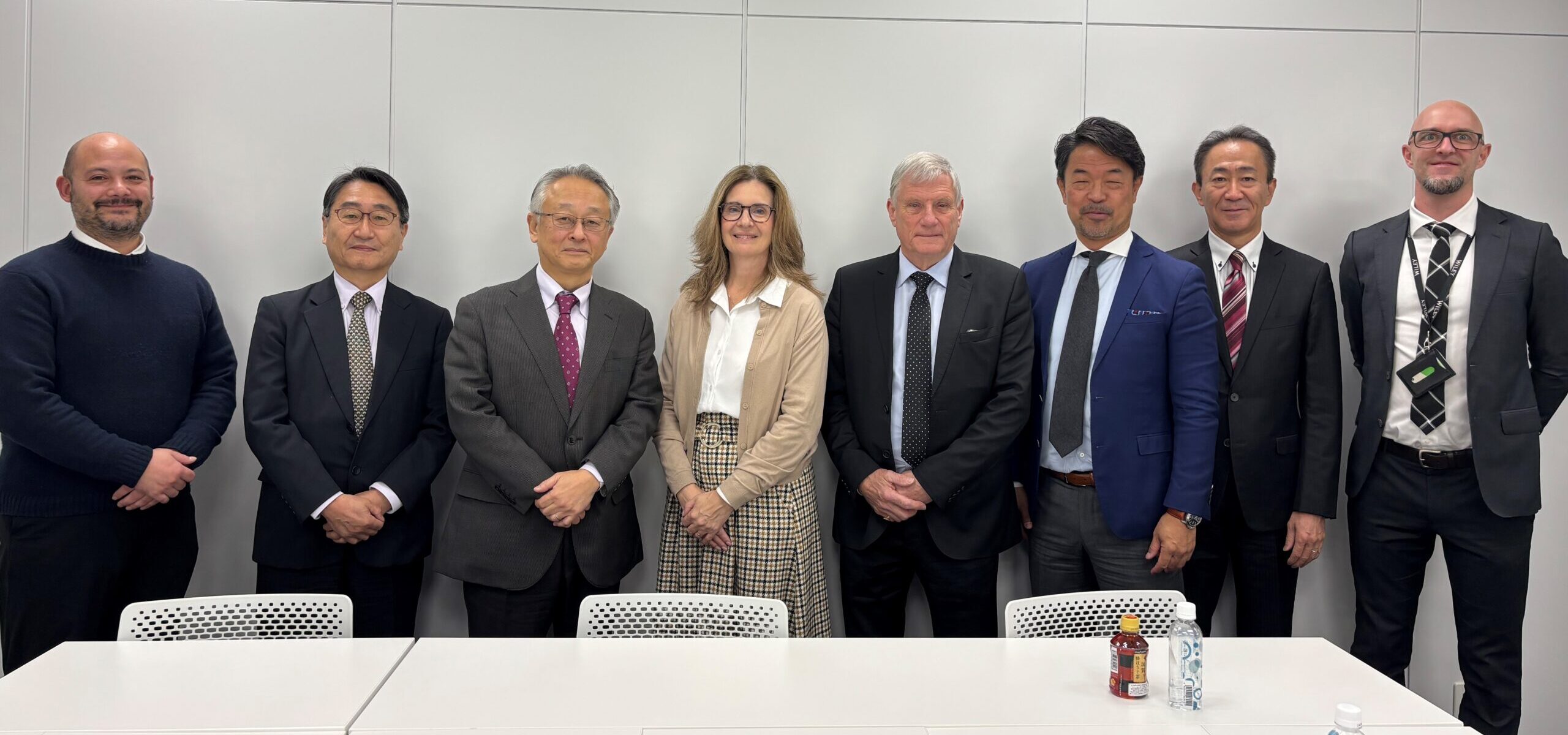
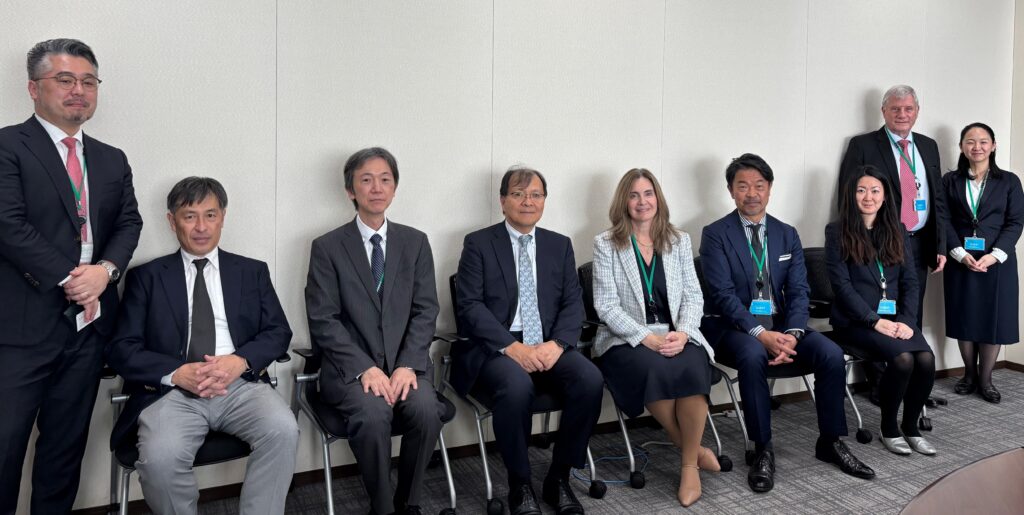
In early November, STM CEO Caroline Sutton spent several days in Tokyo meeting with funders, government leaders, research agencies, and publishing groups — alongside delegates from STM’s Japan Chapter. As in last year’s visit, the conversations were productive, wide-ranging, and grounded in strong local partnerships. And while open science dominated the agenda in 2024, this year the spotlight had clearly shifted to AI, research integrity, and the evolving policy landscape in Japan.
Government: A New Five-Year Plan and a Changing Landscape
One of the most important conversations took place with Professor Kohei Miyazono, the new Chief Executive Member of Japan’s Council for Science, Technology and Innovation. With his background as a journal editor and society president, he brings a nuanced understanding of scholarly publishing to the table.
Japan’s next Five-Year Plan is expected in early 2026 and may include efforts to reverse the country’s relative decline in research output — potentially with an increase in national research investment.
Discussions also touched on rising political tensions with China, including a growing concern: inter-governmental research co-funded by China may require that 50% of resulting publications appear in Chinese domestic journals.
Open science, which dominated last year’s visit, received only brief attention — a sign that, with the national policy now launched, ministries have turned their focus to newer priorities.
Funders: Open Access Progress & AI Guidance
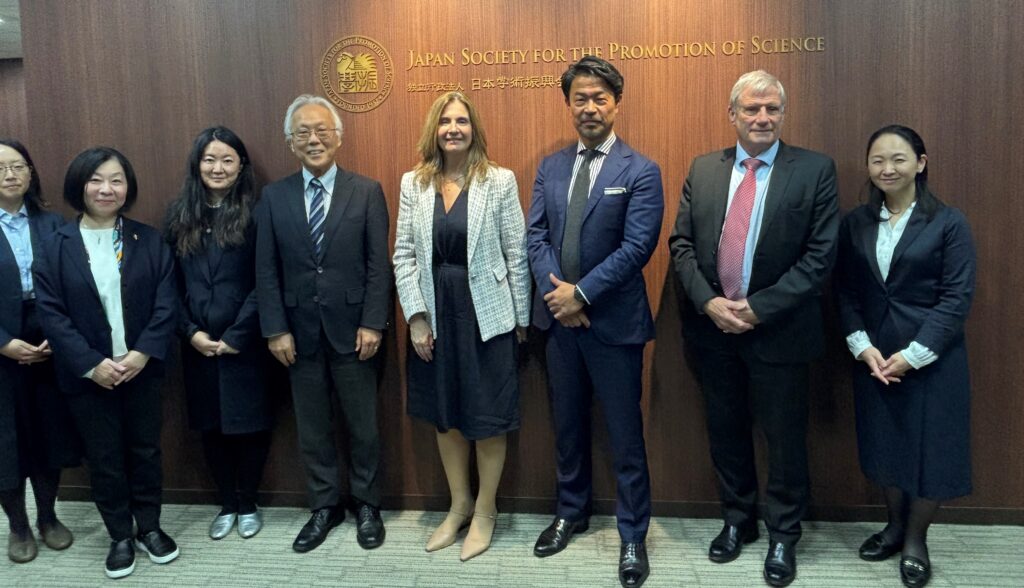
Meetings with AMED, JSPS, and JST remained warm and constructive.
- AMED sees open access expanding gradually under the national policy and is now considering how to guide researchers on use of AI — both in research practice and in grant evaluations.
- JSPS anticipates possible increases to Kakenhi grant funding and has recently issued guidance on AI use.
- JST is introducing GrantsData, a new dataset repository that joins a growing ecosystem: J-STAGE, Jxiv, ResearchMap, and JBM. JST also reported increasing requests from LLM developers seeking access to J-STAGE content for training.
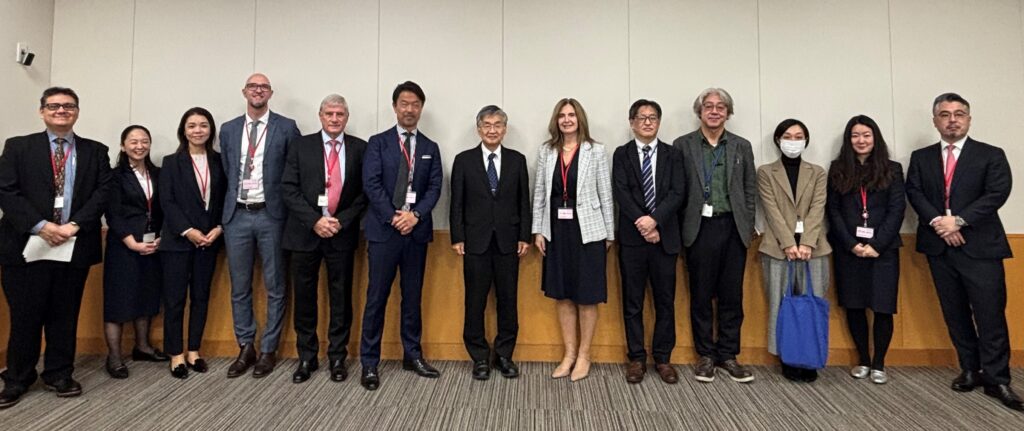
The annual JST/STM Seminar drew its largest audience yet (217 attendees), with a strong slate of talks focused on AI’s impact on publishing, research workflows, and data integrity.
Copyright & Rights Management: New Conversations and a Broader Table
This year’s agenda expanded to include both the Agency for Cultural Affairs (ACA) and the Japan Book Publishers Association (JBPA).
ACA reaffirmed that any AI use of copyrighted works that risks harming commercial rights requires licensing under Japanese law. They are now convening creative industries and rights-holder groups across three working groups to develop a Code of Conduct for AI and copyright — an area where STM has offered continued support.
Discussions also included updates on:
- SATRAS, which collects and distributes compensation for educational copying (roughly ¥4.8 billion annually), and
- SARLIB, the new system overseeing library transmissions under Article 31 of the Copyright Act, where publishers may opt their titles out of transmission.
Open Access & National Policy Momentum
With the April 2025 launch of Japan’s national open science policy, agencies signaled they are now turning attention to other pressing issues such as AI governance and research integrity.
At the same time, STM data presented during the visit showed an interesting trend: the share of subscription articles is increasing while open access output is tapering, despite a growing number of read-and-publish agreements.
Factors contributing to this include:
- Institutions asking researchers to pay additional fees even under existing agreements
- Restrictions at some universities on publishing in non-Q1/Q2 journals
- Policy flexibility allowing non-immediate OA when a reason is provided
As a result, many articles may continue to appear in subscription journals for the foreseeable future.
Meanwhile, NII continues its work on metadata integration and infrastructure development through CiNII Research, connecting institutional repositories across Japan.
Local Publishing Community & Outreach
Caroline and the STM delegation also met with JBPA leadership for the first time in over a decade — a meaningful step toward deeper collaboration on copyright, AI, and shared challenges facing publishers globally.
An STM Japan Chapter meeting was held at Wiley’s offices, and Caroline also gave an interview to Science News, reaching 40,000 readers across Japan’s research community.
In Summary
Caroline’s 2025 visit to Japan underscored a clear shift in national and institutional priorities:
- AI is now the central topic of concern across government, funders, and publishers.
- Open science policy implementation is underway, but attention is moving toward research integrity, infrastructure, and practical impact.
- Copyright and rights management are entering a new phase, with Japan taking proactive steps to clarify how AI and copyrighted content can coexist.
- Engagement with Japan’s publishing ecosystem remains strong, with new bridges being built between STM and national associations.
Overall, this year’s meetings reinforced Japan’s importance as a thoughtful, collaborative partner in shaping the global future of scholarly communication.